Industrial Machine Handover to Stable Production: Operator Training and Ramp-Up Plan
11 min read
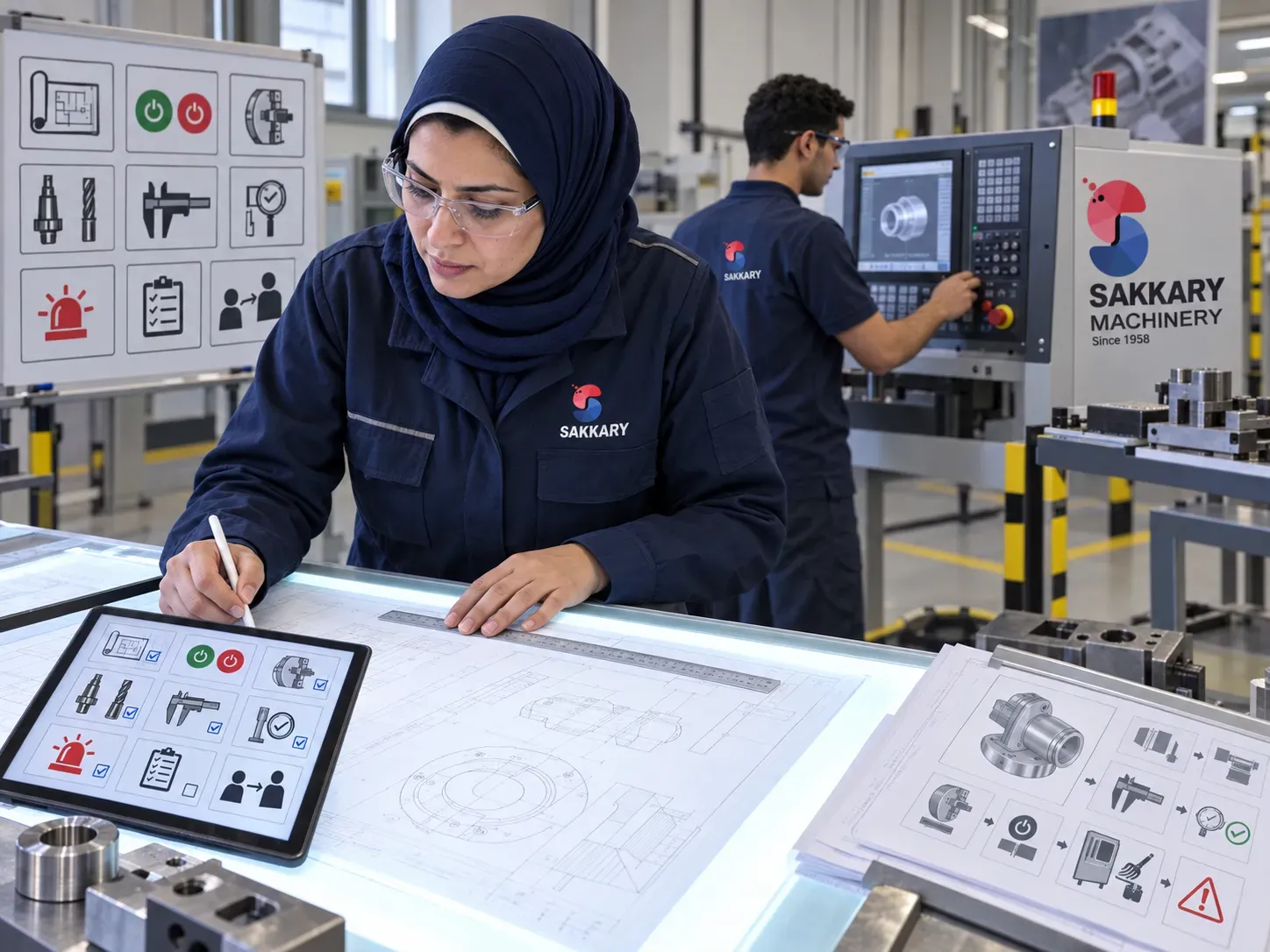
Stable production does not begin when a machine runs for the first time or when a handover form is signed. It begins when the factory team can repeat the required work within approved operating, quality and safety instructions across the intended shifts, with clear ownership for decisions, records and escalation. The period between delivery and routine production should therefore be managed as a controlled transition with defined inputs, evidence, responsibilities and exit criteria.
A machine may be installed and operational while production is still unready. Documentation may be incomplete, some operators may not have performed the work, the first piece may not be approved, one shift may depend on a single expert, or open issues may remain in material, tooling, programs or measurement. Treating machine movement as production stability encourages the factory to increase output before sources of variation are understood, creating rework, scrap and stoppages that could have been exposed earlier.
This guide focuses on the period after machine delivery and before the process enters routine operation. It is a general framework and must be adapted to the manufacturer manual, machine type, factory procedures, product, and approved safety and quality requirements.
1. Define stable production before handover begins
Do not use “the machine is running” as the success criterion. Agree what stability means for the actual process before startup. Criteria should be observable and recorded, not a general impression that operation has improved.
Depending on the process, transition criteria may include:
- The controlled job document and approved revision are available.
- Pre-start, startup and shutdown checks follow approved instructions.
- A representative result can be produced and required characteristics inspected with suitable tools.
- Setup, workholding, tooling and the approved program or recipe are controlled.
- Operators know their role limits, stop conditions and escalation path.
- Primary and backup coverage exists for the intended shifts.
- Errors, stops, changes and open items are captured in one controlled log.
- Critical items are closed or covered by an approved temporary action with an owner and due date.
Stability does not mean that every problem has disappeared. It means the process is understood and controlled: the issue is visible, its impact is known, an owner is assigned, and the response does not depend on undocumented individual knowledge.
2. Separate machine handover, training completion and production acceptance
These are three different gates. Signing one must not be treated as evidence that the others are complete.
Machine handover
This covers identity, delivered equipment, documents, visible condition, agreed items and recorded observations. It does not by itself prove that every function has been tested or that the factory can produce every target product, except to the extent defined in approved acceptance tests.
Training completion
This means the agreed training scope has been delivered and each trainee had the required practice and assessment for the role. Attendance proves participation. It does not prove independent performance or grant unrestricted authority to change programs, parameters or maintenance functions.
Production acceptance
This demonstrates that the intended product or process can be executed against the factory's approved documents and criteria with the required material, tooling, measurement and ownership. A technically functional machine may still support a production process that needs further validation or control.
Give each gate a separate status: complete, complete with open items, or incomplete. This prevents administrative closure while operational risks remain unresolved.
3. Build one controlled handover file
Scattered information in messages, personal files and informal conversations makes startup fragile. Create one structured record owned by the factory and accessible to authorized people.
Depending on the approved scope and available evidence, include:
- Machine identity, model, serial number, control and relevant version.
- Delivered equipment, accessories, tooling and documentation.
- Manuals, instructions, drawings and diagrams that the agreement permits the factory to receive.
- Authorized program, recipe or parameter copies and the approved backup method.
- Relevant installation, utility, guarding and acceptance records.
- An open-item log with impact, owner, due date and current status.
- Training records: people, roles, tasks practiced, results and restrictions.
- Support contacts and the escalation route during the startup period.
- A change log stating what changed, why, when, by whom and who reviewed it.
Do not place passwords, access keys or sensitive information in a general training file. Temporary accounts, permissions and backups must follow the factory's controls and use the least access required.
4. Assign startup responsibilities
“The project team” is not an accountable owner. Name a person for every decision, record and handover. Titles vary between factories, but the following responsibilities should be clear:
- Production-transition owner: coordinates the plan and authorizes movement between stages.
- Production supervisor: manages shifts, workplace application and daily operating gaps.
- Operators: perform permitted tasks and record results and abnormal conditions.
- Process or programming owner: controls approved versions and prevents uncontrolled changes.
- Maintenance: receives technical boundaries, permitted checks, fault history and safe-isolation requirements.
- Quality: approves measurement methods, acceptance characteristics, first-piece evidence and nonconformity records.
- Safety owner: reviews relevant hazards, guarding, site entry and emergency controls.
- Supplier or training representative: clarifies the agreed support scope and outstanding obligations.
Record who can stop the process when production pressure conflicts with verification. Unclear stop authority can encourage an operator to continue an unstable process to protect the schedule.
5. Prepare the training job and startup resources
A suitable job connects training to production. It should represent the real process well enough to test setup, operation and inspection, without using a high-risk or high-cost part as the first attempt before fundamentals are proven.
Before the session, confirm:
- Controlled drawing or job document and revision.
- Material, quantity, condition and batch identification when relevant.
- Tooling, fixtures, consumables and measuring equipment.
- Approved program, recipe or setup steps and who may change them.
- Acceptance characteristics, inspection method and approval authority.
- Machine availability without uncontrolled production conflict.
- Trainee names, roles, shifts, language and reference materials.
- The method for recording results, deviations and questions.
If inputs are incomplete, do not hide the gap in a generic completion report. Mark it Needs Verification, state the impact on training or startup and assign an owner.
6. Deliver role-based training in stages
Startup requires a sequence that allows learning and verification, not a fast demonstration followed by an attendance signature.
Orientation and authority limits
Trainees first understand the objective, hazards, guards, controlled documents and role boundaries. Operation, setup, programming, diagnosis and maintenance must be distinguished because training on a function does not automatically grant authority to change or bypass it.
Explained demonstration
The trainer performs the task and explains decisions, warning signs and what must be checked before the next step. Showing movements without explaining the reason produces fragile imitation that fails when conditions change.
Individual supervised practice
Each trainee performs the required part of the role. The supervisor records where assistance was required, which step was unstable and what must be completed before independent work is permitted.
Assessed independent performance
The operator repeats the task without prompting, using approved references and tools. The assessor compares performance against written criteria and records the result, restrictions and required retraining. One person's competence must not be used as evidence for the whole group.
Repetition across shifts
When the machine will run on multiple shifts, test knowledge transfer and shift handover. A highly capable first-shift operator does not protect production if other shifts depend on that person remotely.
7. Treat first-piece approval as process evidence
The first piece connects the machine, material, tooling, program and measurement to the controlled job requirement. Its record should allow the team to reconstruct what happened.
The record may include:
- Job identity, drawing, revision, material and batch.
- Program or recipe identity and approved revision.
- Tooling, fixtures and measurement equipment used.
- Characteristics inspected, results, inspector and approver.
- Deviations or changes, their reasons and approval owner.
- Open items affecting repeatability or production rate.
Do not treat first-piece approval as unrestricted permission to change material, tooling, program or workholding. When an influential input changes, use the approved change route and decide whether revalidation is required.
8. Ramp production gradually
After the first piece passes, use limited batches or operating periods to expose variation before expanding its impact. Ramp speed depends on the process, risk, team capability and factory policy; no single percentage or duration fits every machine.
At each stage, monitor what applies:
- Setup repeatability, setup time and recurring setup errors.
- Inspection results, nonconformity, rework and scrap.
- Alarms, stoppages, requests for help and recorded causes.
- Tool or consumable use and signs of abnormal consumption.
- Completion of checks, records and shift handover.
- Effects of material, utilities, program and measurement on results.
- Gaps requiring targeted coaching or updated work instructions.
Do not use an undocumented workaround merely to keep production moving. If an approved temporary action is necessary, record its duration, limits, owner and replacement or removal plan.
9. Separate training gaps from process and machine problems
Not every deviation proves that the operator lacks skill. Repeated retraining will not correct unsuitable material, worn tooling, an uncontrolled program, utility instability, a measurement problem or a machine fault.
Collect evidence before choosing the response:
- Was the approved work instruction followed?
- Does the operator know the criterion and previously demonstrate the same task?
- Did the drawing, material, tool, program or setup change?
- Does the problem affect all operators or one person or shift?
- Are there alarms or signs of machine or utility deterioration?
- Are the measurement method, reference and instrument controlled?
A knowledge gap needs explanation or targeted training. A performance gap needs practice and reassessment. A documentation problem needs revision control. A technical fault follows the maintenance route. Correct classification protects time and keeps training credible.
10. Control shift handover and skill coverage
A useful handover transfers process condition, not only the number of parts produced. The log should capture relevant details such as job and revision, program and tool status, last inspection results, alarms or stops, temporary actions, open items and what the next shift must review.
Connect the shift plan to the skills matrix. The supervisor should know who may work independently, who requires supervision, who owns programming, setup or assessment, and who provides backup during absence. Do not declare stable production when continuity depends on one irreplaceable person.
11. Run a short evidence-based startup review
During ramp-up, use a daily review or a frequency appropriate to risk and rate of change. Keep it short and specific.
Review:
- Safety, quality, stoppage and abnormal-condition results.
- Tasks demonstrated and skills still requiring supervision.
- Open items, owners, due dates and overdue actions.
- Changes since the previous review and their observed effects.
- The next-stage decision: proceed, hold, or stop for verification.
Every item should finish with an action, owner, date and closure evidence. “Under review” without a person or deadline does not control risk.
12. Use explicit exit criteria for routine operation
Startup closes when the process can be managed through the factory's normal operating system, not when the trainer or supplier leaves the site.
Exit criteria may include:
- Required handover files, documents and controlled copies are complete.
- Named people passed the required tasks or restrictions and closure plans are recorded.
- First-piece, measurement and relevant record methods are approved.
- Intended shifts can operate, hand over and escalate correctly.
- Critical items are closed and no uncontrolled temporary action remains.
- Open maintenance, training and quality actions are transferred to permanent owners.
- Follow-up indicators, review dates and retraining triggers are defined.
Document what was accepted, what remains open and what is outside scope. Do not use “stable production” as a permanent guarantee. It is an operating condition maintained through review and change control.
Common transition mistakes
- Signing handover before open items and owners are recorded.
- Treating training attendance as independent-work authorization.
- Using a demonstration piece that does not represent real setup and inspection.
- Increasing output before variation and stoppage causes are understood.
- Allowing program or setup changes without a controlled record and approval.
- Running shifts without demonstrated competence or suitable backup.
- Responding to every problem with retraining before cause analysis.
- Closing the project while documentation, backups or support responsibilities remain unclear.
Frequently asked questions
Does producing the first piece mean production is stable?
No. The first piece is valuable evidence that the process can work under defined conditions. Stability requires controlled repetition, clear records, skill coverage and the ability to respond to variation across the intended shifts.
Who should authorize the move to routine production?
Factory management should name an accountable decision owner, supported by production, quality, maintenance, safety and relevant technical roles. The decision should not depend solely on a supplier or trainer signature.
How long should production ramp-up take?
There is no universal duration. It depends on process complexity, site readiness, team competence, available material, tooling and measurement, number of shifts and the nature of open items. Closure should follow evidence and agreed criteria.
Must every operator complete a full job?
Each person should be assessed on the tasks they will be authorized to perform. Tasks may differ by role, but observing colleagues or signing attendance is not evidence of individual practical performance.
What should happen when shifts produce different results?
Compare documents, setup, material, tooling, program, measurement and operating behavior between shifts. Separate the skill gap from different inputs or machine condition, take a specific action and verify the result.
When is retraining required after startup?
Retrain when evidence shows a performance gap, when the machine, program, tool, product or role changes, after a long absence, or when review shows that competence is no longer stable. Do not repeat the entire program when a defined gap can be corrected and reassessed directly.
Next step
Review the current machine journey from handover record to the latest shift: which documents are missing, who has not been assessed, whether the first piece is traceable, which actions remain open, and whether startup has written exit criteria.
For an initial technical review of the training and production-ramp plan, provide the machine type, model and control, target product or job, shifts and team roles, installation status, acceptance or first-piece results and open issues. Any final scope remains subject to technical review and written agreement.
Need a machine, tooling or a service visit?
Request a price