Short answer
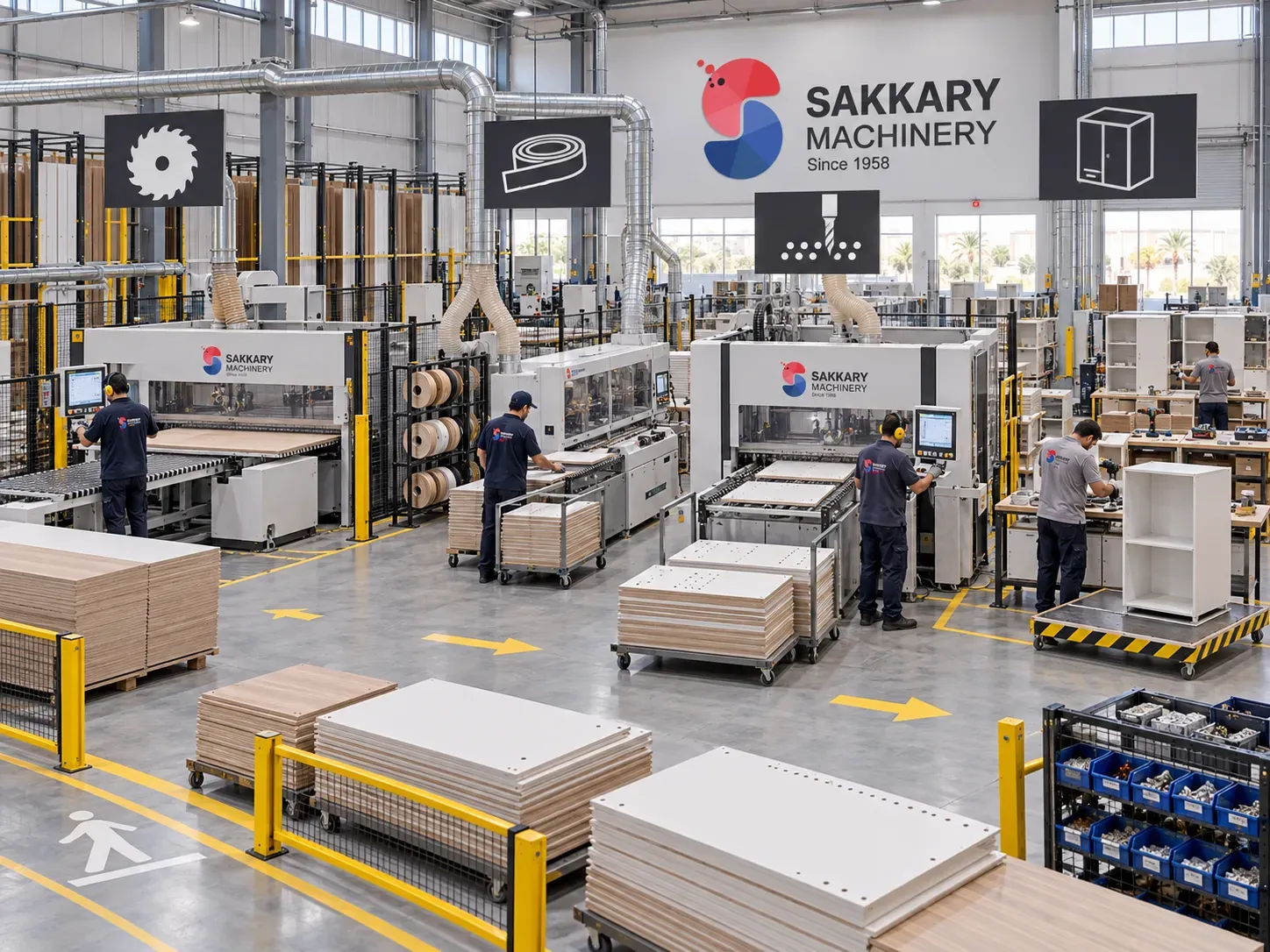
A furniture line should be sized from the cabinet mix, board types, batch pattern, finish, hardware and daily accepted output. Balance cutting, edging, drilling, sorting and assembly so one fast machine does not create queues elsewhere.
Define product families
Group cabinets and components by board, thickness, finish, edge specification, drilling pattern and batch size. Identify standard and exceptional parts before selecting equipment.
Design data and part flow
Connect design, cut lists, labels, nesting, edge instructions, drilling and assembly identification. Plan remnant control, sorting, rework and traceability.
Validate the bottleneck
Use realistic changeovers, operator content, maintenance and rejection. Compare accepted sets or cabinets per shift rather than individual-machine catalogue rates.
Decision inputs
• Product-family and cabinet mix
• Board, finish and edge requirements
• Cut lists and batch pattern
• Drilling and hardware data
• Floor flow and staffing
• Accepted output and quality gates
Frequently Asked Questions
Should cutting capacity lead the line?
Not necessarily. Edging, drilling, sorting or assembly may be the true constraint.
Can software be selected after the machines?
Data flow should be designed with the process because labels, programs and traceability affect output.
Next step
Share a representative cabinet list, board specification and output target for a line-balance review.
Suggested internal links
• Relevant machine category or solution page
• Closest published selection guide
• Relevant cost or maintenance article
• Technical request form
Sources and verification status
Sources used: SAKKARY MACHINERY controlled product-content schema and website governance, plus general process references. Any model-specific capacity, material, application or commitment must be verified against that exact model's official catalogue before publication. Status: Needs Verification.
Need a machine, tooling or a service visit?
Request a price