Blog Production Technologies & Solutions
Electrical Enclosure Manufacturing: From Sheet to Cabinet
2 min read
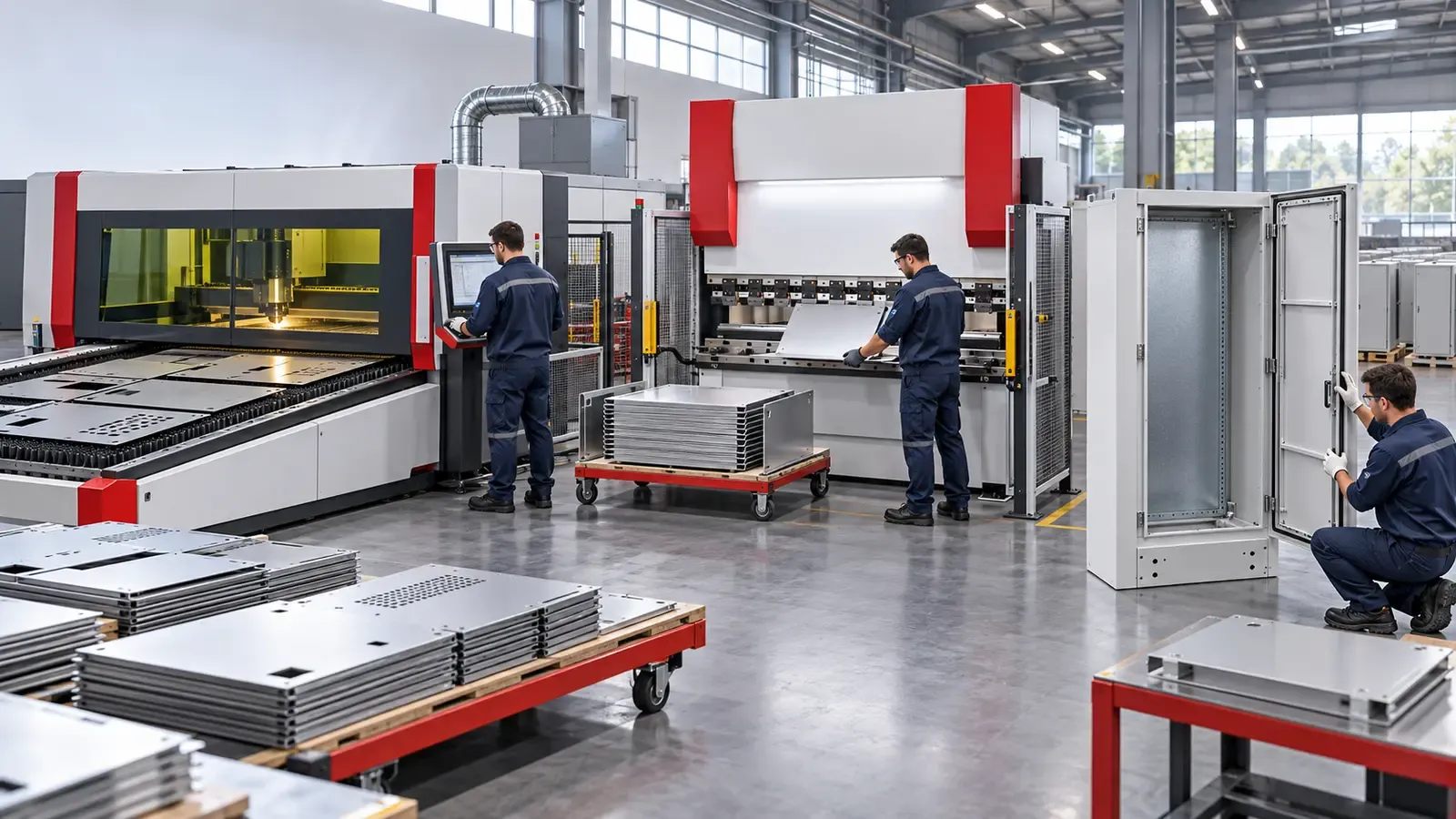
Electrical Enclosure Manufacturing: From Sheet to Cabinet: A practical production-planning guide from SAKKARY MACHINERY. The right machinery mix depends on product drawings, material, tolerance, finish and realistic demand.
Define the enclosure specification
A metal electrical enclosure is not only a bent box. Determine cabinet dimensions, sheet material, door and panel requirements, cutouts for components and cable entries, finish and required production quantity. Applicable electrical and enclosure standards must be confirmed for the intended market and use.
Validate the flat pattern
Prepare a correct flat pattern and check bend allowance, corner details, hole positions and tolerances. Errors at this stage can prevent subsequent components and doors from fitting. Produce a prototype before approving volume production.
Cut, bend and join in sequence
Depending on volume and part mix, operations may use laser cutting or punching, a press brake or panel bender, followed by welding, fasteners or clinching as appropriate. Sequence the work to preserve dimensional consistency and accessibility.
Finish, assemble and inspect
Plan surface preparation and coating, then install hinges, seals and fittings as specified. Separate the fabrication scope from electrical component installation and testing; the latter needs its own technical and safety competence. Validate the final enclosure against the approved specification.
Measure the complete line
Record cutting, bending, joining, coating and assembly cycle times, setup losses and scrap. Identify the slowest process and calculate realistic capacity. Include handling, tooling and final inspection when comparing machinery proposals.
Common mistakes to avoid
Buying machinery before studying representative products; overlooking fixtures, inspection and downstream operations; and sizing capacity without setup, quality losses or maintenance.
Questions and answers
Is a fiber laser always necessary?
No. Compare punching, laser and other processes based on drawings and volumes.
What commonly causes assembly errors?
Flat pattern mistakes, bend variation and hole-position tolerance buildup.
Does fabricating the enclosure certify an electrical panel?
No. Electrical assembly, tests and compliance need separate verification.
Next step
Share representative drawings or samples, materials, target quantities, accuracy requirements and site constraints with SAKKARY MACHINERY to discuss a technical assessment. Final equipment choices require application tests and review of the manufacturer documentation.
Need a machine, tooling or a service visit?
Request a price