How to Compare Machine Operator Training Proposals: A Practical Buyer’s Guide
7 min read
The direct answer
The best machine operator training proposal is not automatically the cheapest or the longest. A strong proposal explains exactly who will be trained, on which machine, control and application, which tasks each participant must demonstrate, how practical work will be delivered, what evidence will confirm competence, and what is included or excluded from the commercial offer.Before comparing suppliers, give every bidder the same factory information and the same request. If each provider works from a different assumption, price and duration comparisons will be misleading. The purpose is not to buy classroom hours. It is to close a defined skills gap and help operators perform authorised tasks under the factory’s approved operating and safety controls.1. Define the training need before requesting proposals
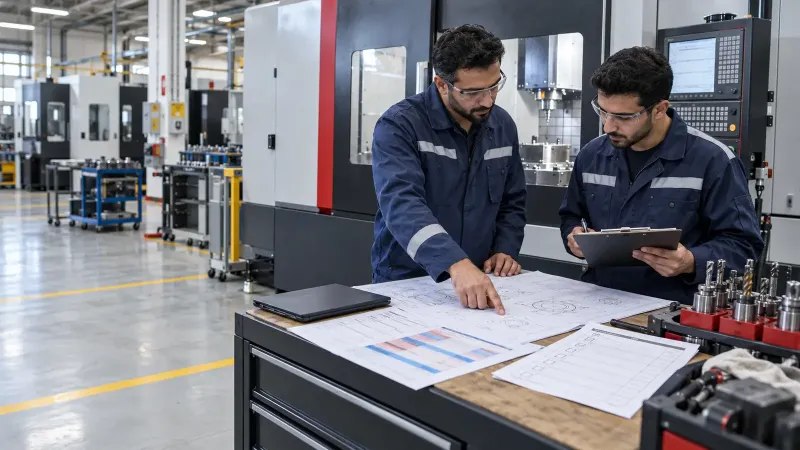
“We need machine training” is too broad. One supplier may interpret it as a general control-panel introduction, while the factory expects job setup, use of approved programs, first-piece inspection, shift handover and operator care. Begin with a short training-needs brief that answers these questions:- What are the machine type, make, model, control and relevant software version?
- Is the machine new, already in production, or returning after a shutdown or change?
- Which product or production family should the practical work represent?
- Which materials, dimensions, tooling and measuring equipment are available?
- How many operators will attend, what is their current level, and which language is suitable?
- Which tasks are operators authorised to perform, and which remain with maintenance, programming or supervision?
- What issue must be addressed: initial operation, inconsistent skills, setup errors, poor handover, waste, or a new team?
- What evidence will count as a successful outcome?
2. Put every proposal into one comparison table
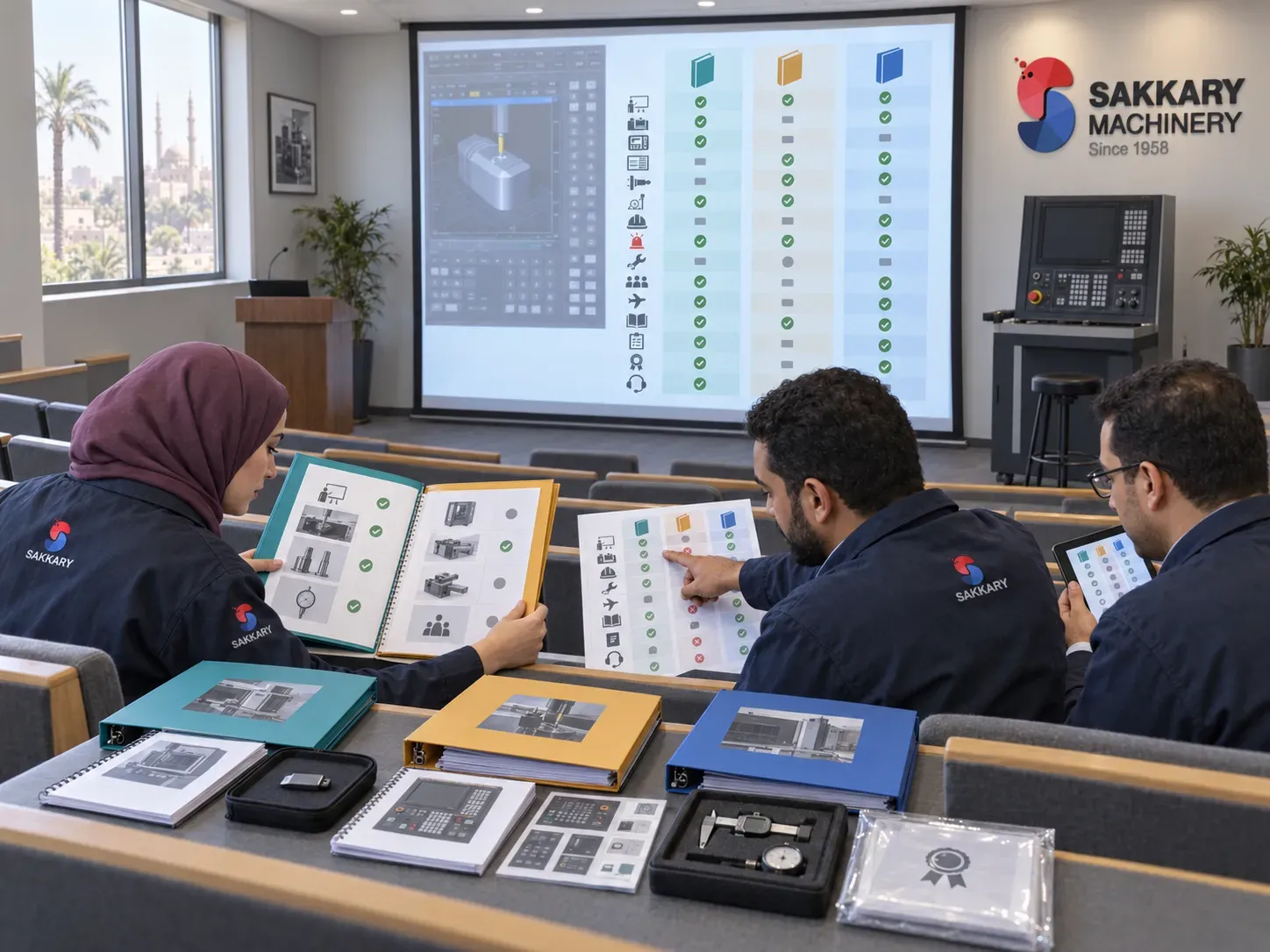
Do not compare proposals only in their marketing format. Transfer each offer into one table using identical criteria, then ask bidders to confirm whether each item is included, excluded or subject to clarification. Useful comparison fields include:- Machine, control and application scope.
- Required participant entry level.
- Learning outcomes.
- Theory and practical activities.
- Trainer and delivery language.
- Training location and facilities.
- Required materials, tooling, files and software.
- Individual operator assessment.
- Records and handover deliverables.
- Post-training follow-up.
- Customer and provider responsibilities.
- Exclusions, total cost and rescheduling terms.
3. Compare learning outcomes, not session titles
A heading such as “Introduction to operation” says little about what an operator can do afterwards. Look for outcomes written as observable actions: identify the approved pre-start checks, select an authorised file or program, prepare the job according to the factory procedure, conduct a supervised trial, inspect the result using the approved method, record an alarm, or escalate a condition that exceeds the operator’s role.Outcomes must respect authority levels. Training does not automatically authorise an operator to change machine parameters, bypass safeguarding, perform electrical or mechanical work, or use an unapproved production program. A responsible offer defines role limits, stop conditions and escalation routes.4. Examine the quality of practical work
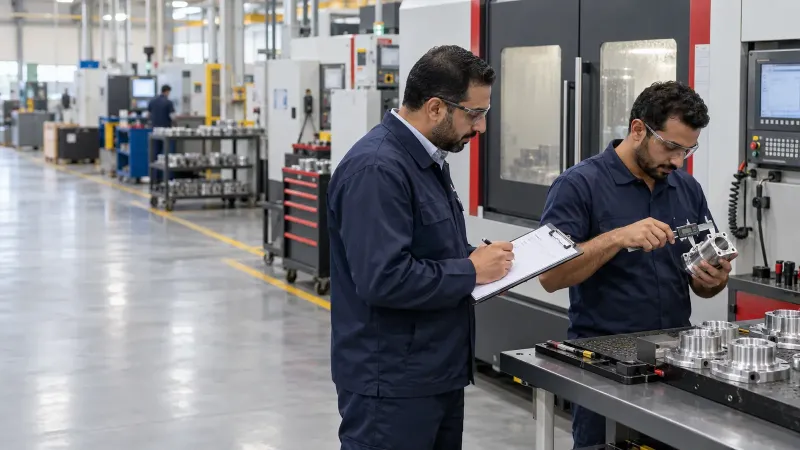
The word “practical” in a proposal is not enough. Ask what every participant will physically do, how many people can practise effectively, whether the activity will use the customer’s machine or an equivalent training machine, and whether the material, tools and files represent the production environment.Strong practical delivery normally explains hazards and limits first, demonstrates the task, allows supervised participant practice, and then evaluates the repeated task. Depending on machine type and the approved scope, the activity may include pre-start verification, retrieving an approved file, preparing the workpiece and tool, conducting a monitored trial, checking the first result, recording a deviation, and stopping or escalating when required. Exact technical steps must come from the model-specific documentation and site procedures, not generic internet instructions.Also examine the participant-to-machine and participant-to-trainer arrangement. If the group is large relative to practice opportunities, the course may produce observers rather than capable operators. There is no universal ideal ratio: the provider should explain how every participant will receive sufficient supervised practice and individual assessment.5. Assess the trainer and learning materials
Request the proposed trainer’s name or a profile showing relevant experience with the machine category, control and application. General industrial experience is valuable, but it does not alone prove capability for the specific requirement. Ask about trainer substitution, delivery language and the ability to explain technical concepts to mixed experience levels.Review what participants will receive. Are the materials connected to the relevant model and agreed scope? Do screenshots and interface images match the control? Do the materials distinguish manufacturer instructions, factory procedures and trainer guidance? Is there a revision number and review date? Uncontrolled or outdated files should not become the factory’s only operating reference.6. Make individual assessment part of the offer
An attendance certificate confirms participation; it does not demonstrate that the person can perform the task. Request an individual assessment that may combine short knowledge checks with observed practical performance against a defined checklist.The assessment may record that the participant demonstrated the task under defined conditions, needs further supervised practice, or could not be assessed because a prerequisite was unavailable. A result should never be used to extend authority beyond the factory’s competence and authorisation system.Agree the records before award: attendance, each participant’s results, the tasks assessed, open gaps, recommended follow-up, assessor name and assessment date. Protect employee information and restrict access to personnel who need it for operational and administrative decisions.7. Confirm readiness and ownership
Training often fails because the proposal assumes readiness that does not exist. The offer should assign responsibility for:- Making the machine available at the agreed time.
- Confirming that it is technically fit for training.
- Providing power, air, extraction, gases or other applicable utilities.
- Providing materials, tools, tooling, measuring devices and files.
- Supplying PPE, induction and relevant work permits.
- Providing production, technical and safety supervision where required.
- Making approved backups, programs and access permissions available.
- Providing interpretation or bilingual delivery if needed.
8. Compare total cost, not the headline price
The quoted fee may exclude travel, accommodation, materials, tooling, interpretation, material preparation, evaluation, reporting, follow-up visits or taxes. The factory may also bear the cost of machine downtime, released operator hours and training samples.Build a total-cost view for each bid using known direct and indirect items, while marking anything that still requires confirmation. Compare that cost with the outcomes and evidence provided, rather than course days alone. Two days with individual practice and documented assessment are materially different from two days of presentation, although only the actual scope can establish which offer is suitable.9. Review support, exclusions and contract terms
Review exclusions carefully, especially maintenance tasks, parameter changes, fault repair, development of full production programs, tooling or die setup, material supply and safety approval. These activities may require another specialist or a separate work order. Clear exclusions protect both customer and provider from false expectations.A concise award framework
Use the following as a decision framework, then assign weight according to your factory’s risk—not as a fixed universal score:- Fit with the machine, control and production application.
- Clarity of learning outcomes and authority limits.
- Quality of practical work and individual practice opportunity.
- Trainer relevance and learning-material quality.
- Strength of assessment and records.
- Realism of readiness and delivery planning.
- Clarity of support and exclusions.
- Total cost and commercial conditions.
Frequently asked questions
Should we select the lowest price when course outlines look similar?Not until you compare individual practice, trainer relevance, assessment criteria, deliverables, responsibilities, exclusions and total cost. If those elements are genuinely equivalent, price can then be a rational deciding factor.Does a longer course mean better training?Not by itself. Duration depends on participant level, task complexity, group size, machine readiness and practical depth. Ask for a time plan showing each participant’s practice and assessment opportunity.Is an attendance certificate sufficient?It documents attendance only. Operational competence requires observed performance against the factory’s defined tasks and permissions, often followed by supervised workplace practice.What if proposals cannot be compared fairly?Issue a common scope template and request revised submissions. Document assumptions and open questions, and do not award the work until their technical and commercial impact is understood.Can training be delivered on an existing customer machine?The provider must review the make, model, control, technical condition, available documentation, permissions and required application. Feasibility and scope should be confirmed after technical review.Next step
Prepare the machine and control details, target workpiece or application, number and current level of operators, required tasks, location, machine condition, and available materials and tooling.Need a machine, tooling or a service visit?
Request a price