Short answer
Define the duct systems and project mix before selecting a line. Rectangular, round and spiral duct routes differ, as do coil-fed and sheet-fed production. Size equipment from accepted duct sections delivered to assembly or site.
Build the production matrix
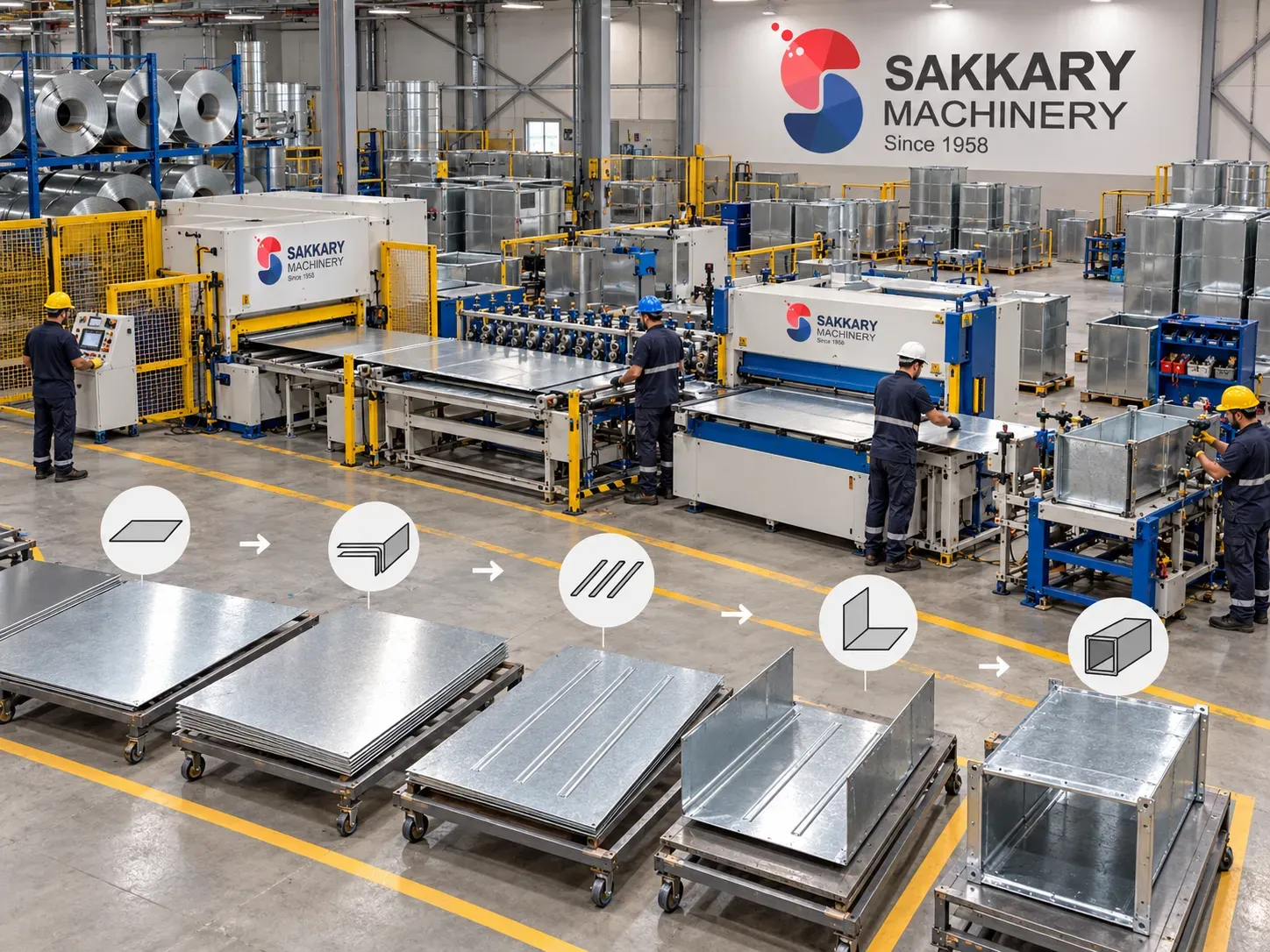
List duct type, material, gauge, dimensions, fittings, seam, flange, insulation and quantity by project. Separate straight duct from fittings and special pieces.
Map fabrication and logistics
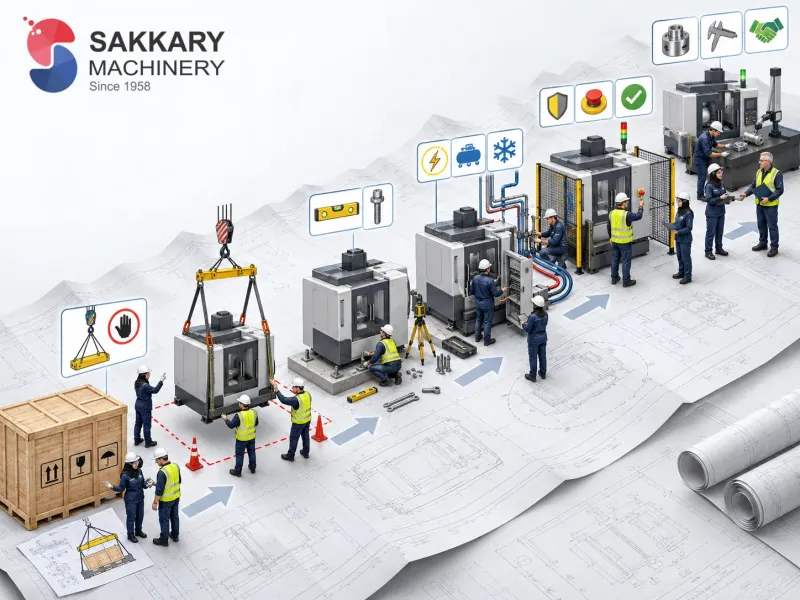
Include design or CAM, cutting, notching, forming, seams, flanges, reinforcement, assembly, labeling, stacking and transport. Large finished duct can move the bottleneck to space and logistics.
Validate standards and safety
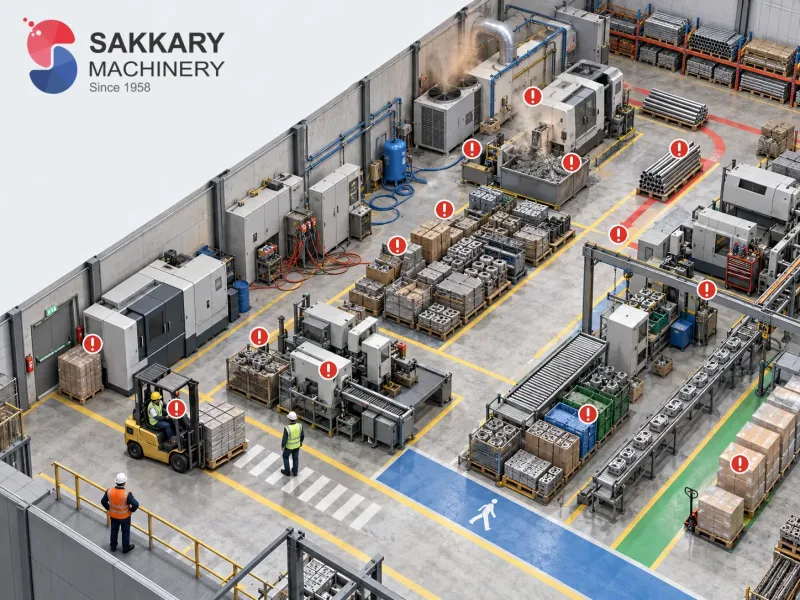
Use the applicable project specification, approved construction standard and manufacturer instructions. Confirm guards, sharp-edge handling, noise, extraction and maintenance access.
Decision inputs
• Duct systems and project specifications
• Material and gauge range
• Straight duct and fitting mix
• Coil or sheet input
• Flange, seam and reinforcement method
• Space, stacking and transport
Frequently Asked Questions
Can one line produce every duct type?
Not automatically. Routes and equipment differ by duct construction.
Should capacity be measured in sheet speed?
No. Measure accepted duct output through assembly and logistics.
Next step
Share a representative bill of ductwork and project construction requirements for line planning.
Suggested internal links
• Relevant machine category or solution page
• Closest published selection guide
• Relevant cost or maintenance article
• Technical request form
Sources and verification status
Sources used: SAKKARY MACHINERY controlled product-content schema and website governance, plus general process references. Any model-specific capacity, material, application or commitment must be verified against that exact model's official catalogue before publication. Status: Needs Verification.
Need a machine, tooling or a service visit?
Request a price