Blog Maintenance & Technical Support
How to Compare Machinery After-Sales Support Proposals
1 min read
Short Answer
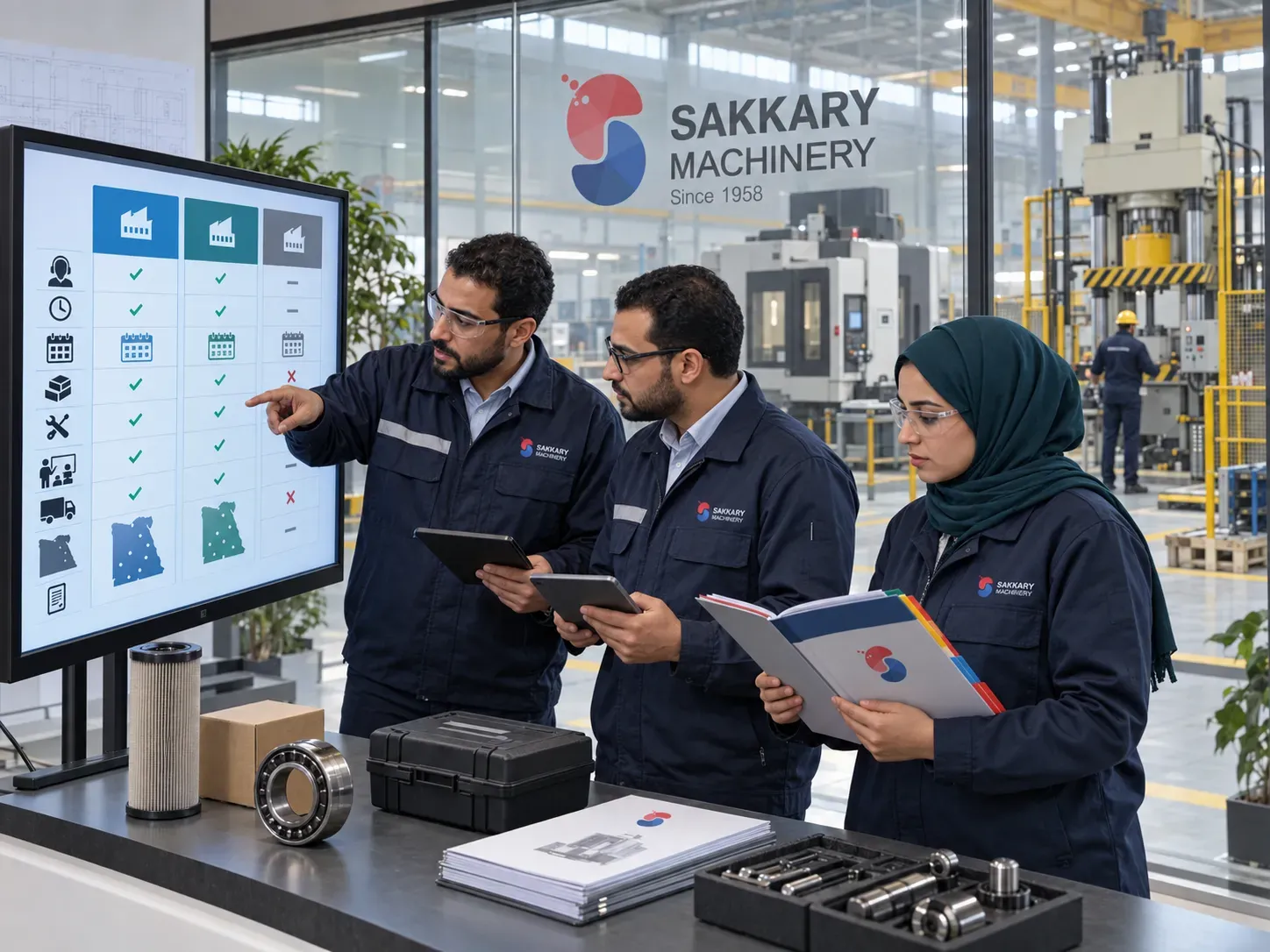
Evaluate after-sales support through response ownership, technical competence, remote and on-site coverage, parts identification, escalation, records and exclusions. Verifiable capability matters more than broad promises.
Normalize the scope
Define support hours, contact channels, triage, remote diagnosis, site attendance, preventive work, software or control support, operator guidance and responsibility after warranty expiry.
Compare capability and evidence
Ask for the named service owner, technician competence for the relevant machine and control, ticket records, escalation path, installed-base data and the method used to identify the correct spare part.
Compare acceptance and handover
A closed ticket should show the machine and serial where available, fault, diagnosis, action, parts, downtime, test result, remaining risk and customer handover. Activity without closure evidence is not resolution.
Compare total cost
Compare warranty exclusions, call-out and travel charges, labor, remote support, response commitments, parts lead time, software access and repeat-failure handling. Model the cost of downtime as well as service fees.
Score risk separately
Avoid promises such as permanent availability or guaranteed response unless approved and evidenced. Confirm which party owns backups, passwords, licenses and controller access before intervention.
Frequently Asked Questions
What should be fixed before proposals are compared?
The required scope, evidence, acceptance result, exclusions, owner and review date.
Is the lowest price automatically the best option?
No. Compare total cost, operational risk and the ability to prove the required outcome.
What is the next practical step?
Share the machine model, serial number, site and symptom to route a traceable technical support request.
Next Step
Share the machine model, serial number, site and symptom to route a traceable technical support request.
Need a machine, tooling or a service visit?
Request a price