Short Answer
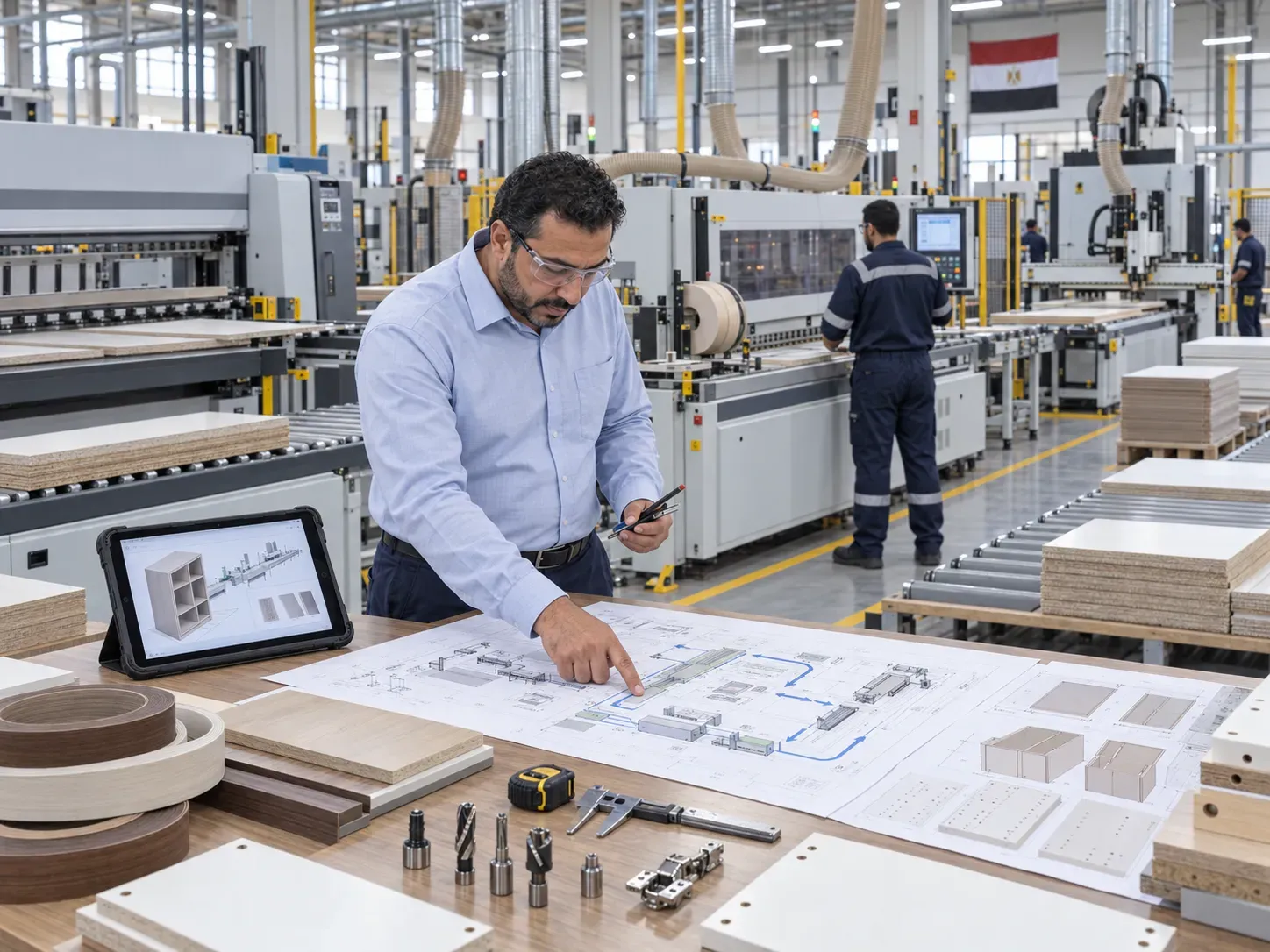
The right woodworking line starts with product flow from raw board or timber to packing, then balances cutting, machining, edging, assembly and finishing capacity. Buying one machine without flow analysis can simply move the bottleneck.
Map product flow
Define products, sizes, materials, operations, sequence, inspection points, scrap and rework. Separate standard production from custom work.
Balance capacity
Calculate good parts per hour at every station including loading, changeover and cleaning. Do not plan around one catalogue speed.
Quality and safety
Review dimensional accuracy, edges, adhesive and finish plus dust extraction, guarding, noise and safe handling. Dust affects quality, health and uptime.
Data and maintenance
Connect work orders, programs, cut lists and materials, with daily care, preventive maintenance and critical spares.
Frequently Asked Questions
Which machine should be bought first?
The one that removes the data-proven bottleneck, not the most popular machine.
How is capacity set?
From actual demand, station time, utilization and quality yield.
Is extraction an accessory?
No. It is part of quality, safety and continuity.
Next Step
Share your products, volumes and factory flow for a woodworking line review.
Need a machine, tooling or a service visit?
Request a price