Short Answer
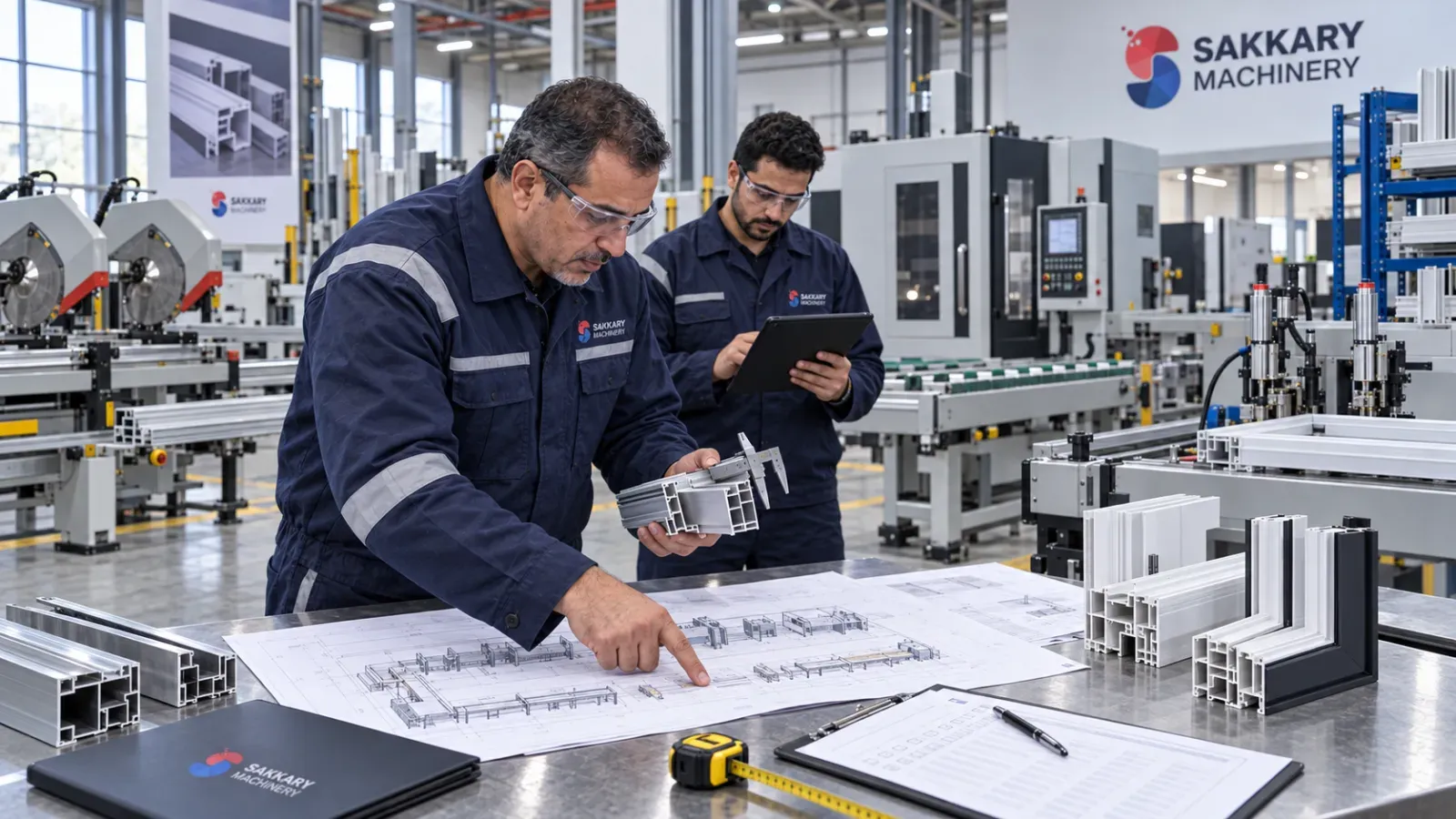
Planning starts with the profile system, finished product and operation list, then balances cutting, milling, drilling, assembly or welding and cleaning. Approve samples, drawings and profile data before selecting machines.
Fix the product system
Collect profile, accessory, corner, drainage, reinforcement and glazing data. Different systems change tooling and operations.
Convert design into routing
For every product define cutting, holes, milling, assembly or welding, cleaning and inspection. This reveals stations and automation level.
Measure assembly quality
Control angles, lengths, hole positions, weld or crimp quality and finished-product movement. Approve a complete sample.
Manage changeovers
Measure size, program and tool changes, and track profile use, scrap and rework. High mix requires flexibility and strong data control.
Frequently Asked Questions
Can machines be chosen without a defined profile system?
That risks unsuitable tooling or ranges; core data should be fixed first.
What is the best trial?
A complete unit that can be inspected and installed.
When does automation help?
When volume, repetition and data flow are sufficient to utilize it.
Next Step
Share your profile system, products and volumes to plan an integrated aluminum or PVC solution.
Need a machine, tooling or a service visit?
Request a price